
Espresso Machine Daily Cleaning Routine: Step-by-Step

Table of Contents
Why Daily Espresso Machine Cleaning Matters
What You'll Need: Essential Cleaning Supplies
The Espresso Machine Backflushing Procedure
How to Clean Espresso Machine Steam Wand Daily
Can You Use Vinegar to Descale Espresso Machine
Cleaning the Portafilter, Baskets, and Group Head
Daily Maintenance Checklist and Common Mistakes
Conclusion
Frequently Asked Questions
Last Updated: September 25, 2026
Why Daily Espresso Machine Cleaning Matters
A dirty espresso machine ruins your coffee. It also breaks your equipment faster than anything else.
Daily cleaning prevents three major problems. First, old coffee oils build up inside the group head and portafilter. These oils turn rancid and make every shot taste bitter or stale. Second, mineral scale accumulates in water lines and the boiler. This scale blocks water flow and forces your machine to work harder. Third, milk residue hardens on the steam wand and inside steam lines. Hardened milk becomes nearly impossible to remove and creates bacteria growth.
This guide covers the exact espresso machine daily cleaning routine that keeps your equipment running smoothly and your coffee tasting excellent.
Regular maintenance also protects your investment. A refurbished Nuova Simonelli machine represents a significant purchase. Daily care means it performs like new for years. Without it, you're looking at expensive repairs or replacement parts you may struggle to find.
Pro Tip Start your cleaning routine immediately after the morning rush ends, not at closing time. Dried residue is much harder to remove than fresh buildup. Spend 10 minutes now instead of 30 minutes scrubbing later.
What You'll Need: Essential Cleaning Supplies
You don't need expensive specialty products. A few basic supplies handle 95% of daily maintenance.
Core cleaning supplies:
Backflush brush or blind basket (no holes)
Espresso machine cleaning detergent (alkaline-based)
Microfiber cloth or lint-free towels
Small brass or nylon brush
Palo brush or group head brush
Water with low mineral content
Descaling solution (for weekly use)
The blind basket is critical. It's a portafilter basket with no holes. You use it with water to create pressure that forces debris out of the group head during backflushing.
Alkaline detergent breaks down coffee oils. Acidic cleaners remove mineral scale. You'll use both, but on different schedules. Daily cleaning uses alkaline detergent. Weekly descaling uses acidic solution.
Water quality matters more than most people realize. Hard water deposits scale faster. If your water is hard, consider a water filtration system. Many cafes use filtered or softened water specifically for espresso machines.
Watch Out Never use vinegar for daily cleaning. Vinegar is acidic and can damage seals and gaskets over time. Save acidic cleaners for monthly descaling only, and use products designed for espresso machines, not household vinegar.
The Espresso Machine Backflushing Procedure
Backflushing forces water through the group head to blast out old coffee grounds and oils. This is the single most important daily cleaning step.
Here's how to backflush properly:
Step 1: Prepare the group head (1 minute)
Remove the portafilter after the last shot
Insert the blind basket (the basket with no holes)
Lock the portafilter into the group head
Step 2: Activate the pump (30 seconds)
Turn on the water pump for 1-2 seconds
You'll hear water spray from the portafilter
Stop immediately
Step 3: Release pressure (30 seconds)
Turn off the pump
Water stops flowing
Wait 1 second for pressure to release
Step 4: Repeat the cycle (2-3 minutes)
Repeat steps 2-3 five to ten times
Each cycle takes about 20-30 seconds
Watch for the water to run clear
Step 5: Final rinse (1 minute)
Remove the blind basket
Insert your regular portafilter with a clean basket
Run water through without coffee
This removes any loose debris
The water should start brown or tan and gradually turn clear. If it's still brown after ten cycles, backflush again later. Don't force it, you can damage the solenoid valve.
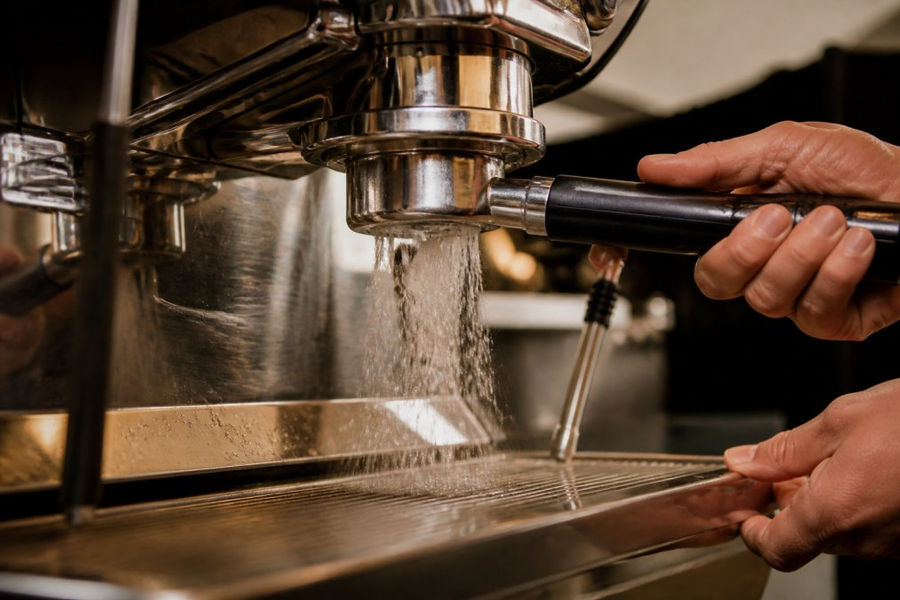
Backflushing removes coffee oils before they harden. Fresh oils wash away easily. Dried oils require aggressive scrubbing and can damage internal components.
Key Takeaway Backflushing takes 5 minutes and prevents 80% of group head problems. This single step is worth more than all other daily cleaning combined.
How to Clean Espresso Machine Steam Wand Daily
The steam wand is where milk residue causes the most damage. Milk hardens quickly and blocks steam flow.
Beacon Coffee Company Inc.
Clean the steam wand immediately after steaming milk. Don't wait until the end of your shift.
Immediate cleaning (right after steaming):
Purge steam through the wand for 2-3 seconds
This forces out milk inside the internal tube
Wipe the outside with a damp cloth
Use a palo brush on the tip to remove dried milk
Deep cleaning (once per shift):
Remove the tip (if removable) and soak in hot water with alkaline detergent
Use a thin brush to clean inside the steam tube
Rinse thoroughly with hot water
Reattach the tip and purge steam
The internal steam line is where problems hide. Milk residue builds up inside where you can't see it. This reduces steam pressure and creates bacteria growth.
If milk hardens inside the steam wand, soak the tip in hot water with cleaning detergent for 15-20 minutes. Then use a thin brush or pipe cleaner to scrub the inside. Stubborn buildup may require soaking overnight.
Purging steam between drinks prevents buildup. A 2-second purge removes most milk before it dries. This takes seconds but saves you hours of scrubbing.
Can You Use Vinegar to Descale Espresso Machine
No. Never use vinegar on your espresso machine.
Vinegar is acidic, which works for removing scale. But vinegar also damages rubber gaskets, seals, and internal components. The acidity eats away at these parts over time, causing leaks and mechanical failure.
Espresso machine manufacturers warn against vinegar. Use descaling products designed for espresso machines instead. These are formulated to remove scale without harming internal components.
Why vinegar fails:
Damages rubber gaskets and seals
Can corrode internal metal parts
Leaves residue that affects taste
Voids warranties on most machines
What to use instead:
Commercial espresso machine descaler (alkaline or acidic, depending on type)
Products from the machine manufacturer
Citric acid-based cleaners (safer than vinegar)
Descaling removes mineral buildup from the boiler and water lines. Hard water creates scale faster. If your water is very hard, descale weekly. Soft water may only need descaling monthly.
Follow the descaler instructions exactly. Most require running the solution through the group head and steam wand, then flushing with fresh water for several minutes. This step is critical, leaving descaler residue ruins your coffee.
Watch Out If you've already used vinegar on your machine, flush it thoroughly with fresh water for at least 10 minutes. Then run several shots of water through the group head to clear any remaining acid. Monitor for leaks over the next few days.
Cleaning the Portafilter, Baskets, and Group Head
These parts contact your coffee directly. They must be spotless.
Daily portafilter cleaning:
Rinse immediately after pulling a shot
Tap out used grounds into a trash bin
Scrub the basket with a palo brush under hot water
Wipe the portafilter handle dry
Store in a clean, dry place
Basket maintenance:
Inspect baskets daily for cracks or damage
Replace damaged baskets immediately
Soak baskets in hot water with alkaline detergent once per week
Use a soft brush to clean the basket screen
Group head care:
Wipe the shower screen after each shot
Remove the shower screen weekly and soak in hot water with detergent
Clean the gasket (rubber ring) with a dry cloth
Check the gasket for cracks or hardening
The gasket is a rubber ring that seals the portafilter to the group head. A damaged gasket causes water to leak. Replace it every 12-18 months, or sooner if you notice leaking.
The shower screen distributes water evenly across the coffee.
Daily Maintenance Checklist and Common Mistakes
Use this checklist every single day. It takes 10-15 minutes total.
Task | Frequency | Time |
Backflush group head | After each shot | 1 minute |
Purge steam wand | After steaming milk | 30 seconds |
Wipe steam wand | After steaming milk | 1 minute |
Rinse portafilter | After each shot | 1 minute |
Clean group head screen | Daily | 2 minutes |
Wipe drip tray | Throughout shift | 2 minutes |
Final flush | End of shift | 2 minutes |
Common mistakes that damage machines:
Key Takeaway Daily cleaning takes 15 minutes. Ignoring it costs you thousands in repairs and lost sales when your machine breaks during the morning rush.
Conclusion
Your espresso machine is the heart of your coffee business. Treat it like a professional tool, not a convenience.
Common Questions About Daily Espresso Machine Cleaning
Frequently Asked Questions
How often should I perform the espresso machine daily cleaning routine?
Run your espresso machine daily cleaning routine every single day you brew espresso. The most critical tasks, backflushing the group head, purging the brew head, and cleaning the steam wand, must happen between each shift or at minimum before closing. Coffee oils and milk residue harden quickly, making same-day cleaning essential. Waiting until the next morning allows buildup to set, compromising extraction quality and shortening machine lifespan.
Can you use vinegar to descale an espresso machine?
Vinegar is not recommended for espresso machines. While vinegar is acidic and dissolves scale, it can damage internal seals, gaskets, and the solenoid valve over time. Use a commercial espresso machine descaling solution formulated to dissolve mineral buildup without harming components. Descaling typically happens monthly, not daily, your daily cleaning routine focuses on coffee oils and milk residue, not scale removal.
What happens if I skip the daily cleaning routine?
Skipping daily cleaning causes coffee oils to oxidize and harden inside the group head, portafilter, and shower screen, blocking water flow and degrading espresso quality. Milk residue in the steam wand hardens into a cement-like buildup that ruins the wand and creates sanitation issues. Over weeks, neglect leads to scale buildup, corroded internal parts, and costly repairs. Daily maintenance prevents these problems and keeps your machine running reliably.
Is backflushing necessary every day?
Yes, backflushing the group head should happen daily, ideally after every few shots or at minimum once per shift. Backflushing reverses water flow through the group head to purge coffee oils and debris from the shower screen and gasket. This prevents buildup that blocks water distribution and causes uneven extraction. Skipping backflushing accelerates wear on the gasket and solenoid valve, leading to expensive repairs.
Specialty Coffee Association's equipment maintenance standards emphasize daily cleaning as the foundation of machine longevity. NSF International food service equipment standards also require regular sanitization of steam wands and group heads in commercial settings.
Request A Quote


Comments