
Commercial Espresso Machine Service: A Step-by-Step Guide

Table of Contents
When Your Commercial Espresso Machine Needs Service
Signs your machine requires immediate attention
Common issues that don't require a technician
Step-by-Step Troubleshooting Before Calling a Technician
Water pressure and temperature problems
Steam wand and group head issues
Grinder and dose consistency
Commercial Espresso Machine Maintenance Schedule
Understanding Commercial Espresso Machine Service Cost
Espresso Machine Repair Response Time and Service Availability
Emergency service during peak hours
Service area coverage and scheduling
How to Choose a Qualified Commercial Espresso Technician
Credentials and factory training to verify
Questions to ask before booking a service call
Repair Versus Replacement: Making the Right Decision
When refurbished equipment makes sense
Warranty and parts availability after service
Frequently Asked Questions
Last Updated: October 16, 2026
When Your Commercial Espresso Machine Needs Service
A broken espresso machine during morning rush is every cafe owner's nightmare. Your customers are waiting. Your staff is stressed. Revenue is disappearing by the minute. The question isn't whether you need service, it's whether you can afford to wait.
At Highpockets Coffee, we work with businesses across the Pacific Northwest facing this exact situation. Some calls could have been prevented with basic troubleshooting. Others needed immediate professional attention. Knowing the difference saves you time, money, and frustration.
Signs your machine requires immediate attention
Stop using the machine immediately if you see water leaking from the base, hear unusual grinding sounds from the pump, or notice the group head won't lock into place. These aren't problems you can wait out. A leaking seal can damage internal components within hours. A grinding pump indicates mechanical failure. A loose group head risks injury and permanent damage.
Steam wand blockages that prevent steam from flowing, sudden loss of water pressure during extraction, or a machine that won't heat water at all also demand professional service. These issues affect every shot you pull. Your customers notice immediately. The longer you wait, the more damage spreads internally.
Common issues that don't require a technician
Not every problem needs a service call. If your espresso tastes bitter or sour, the issue is usually grind size, dose, or tamping pressure, not the machine itself. Adjust your grinder settings before calling for help. If the steam wand produces weak steam, it's almost certainly clogged.
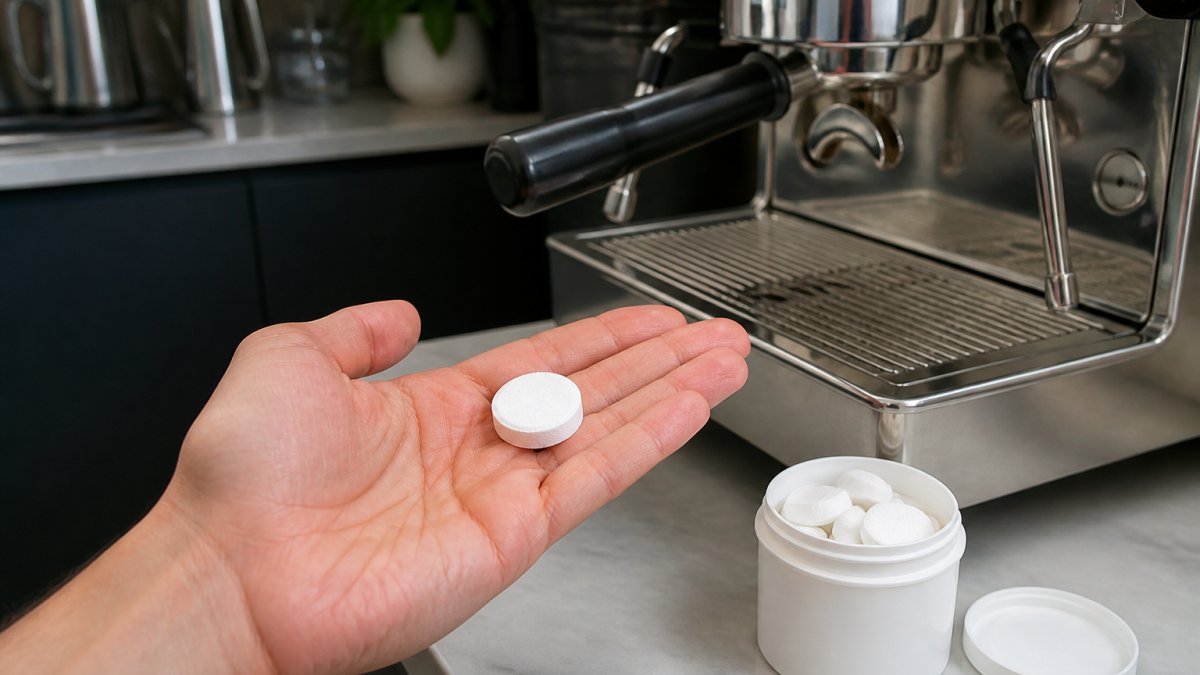
A machine that's slow to heat often just needs descaling. Run a commercial descaling solution through the group head and steam wand according to the manufacturer's instructions. Most cafes descale monthly anyway. If water drips slowly from the group head after you turn off the machine, that's normal. The group head holds residual water. It's not a leak.
Step-by-Step Troubleshooting Before Calling a Technician
Before you dial a technician, run through these checks yourself. You'll either solve the problem or give the technician clear information about what's happening. Either way, you save time.

Water pressure and temperature problems
Pull a shot and watch the pressure gauge. It should climb to 9 bars within 10 seconds. If the needle barely moves, check whether the pump is running, you should hear a distinct humming sound.
If the pump runs but pressure stays low, the group head screen is likely clogged. Remove the portafilter, insert a blind basket (no holes), and run water through without coffee.
Temperature problems usually show up as inconsistent extraction. If your first shot pulls perfectly but the second one tastes weak, the machine needs more warm-up time between shots. Commercial machines need 30-45 seconds between extractions to stabilize temperature.
Steam wand and group head issues
A steam wand that won't produce steam is almost always blocked. Soak the tip in hot water immediately after use. If it's already clogged, soak it in hot water for 10 minutes, then use a thin needle or paperclip to gently clear the opening. Never force anything into the opening, you'll damage the internal valve.
If the group head leaks water around the edges when you lock in the portafilter, the gasket is worn. This needs replacement by a technician. If water sprays unevenly from the group head screen, backflush as described above. If the portafilter won't lock in completely or feels loose, the group head may be damaged.
Grinder and dose consistency
If your grinder produces inconsistent particle size, the burrs are likely dull. Most commercial grinders need new burrs every 6-12 months depending on volume. You can't sharpen burrs yourself, replacement is the only fix. If the grinder produces no grounds at all, check whether beans are actually in the hopper and whether the motor is running.
If doses vary wildly from shot to shot, adjust the grinder's dose adjustment collar. Turn it slightly and pull a test shot. Make small adjustments, a quarter turn makes a noticeable difference. If the grinder won't dispense at all, the chute may be clogged. Remove the hopper and clear any blockage by hand.
Commercial Espresso Machine Maintenance Schedule
Maintenance prevents emergencies. A machine that's properly maintained runs for years without major problems. Neglected machines fail without warning.
Maintenance Task | Frequency | What It Prevents |
Backflush group head | Daily | Clogged screens, uneven extraction |
Clean steam wand | After each use | Blockages, milk buildup |
Purge group head | Daily | Water stagnation, stale coffee |
Descale machine | Monthly | Mineral buildup, pressure loss |
Replace shower screen | Every 3-6 months | Uneven water distribution |
Professional inspection | Quarterly | Hidden damage, worn parts |
Full service and gasket replacement | Annually | Leaks, pressure loss, seal failure |
Daily tasks take 10 minutes total. Backflushing removes coffee grounds and oils from the group head. Purging clears stagnant water. Cleaning the steam wand prevents blockages.
Monthly descaling removes mineral deposits that reduce pressure and heat transfer. Use a commercial espresso machine descaler, not vinegar. Vinegar corrodes internal components.
Quarterly professional inspections catch problems before they become expensive. A technician checks seals, gaskets, pump pressure, and heating element function.
Annual professional servicing includes gasket replacement, pump adjustment, and complete cleaning. This is non-negotiable for machines in daily use.
Understanding Commercial Espresso Machine Service Cost
Service pricing depends on what needs fixing. A simple repair like replacing a gasket costs less than a complex diagnostic involving multiple parts.
What affects repair pricing? The specific part that failed matters most. A steam wand gasket is inexpensive. A pump replacement is not.
Service call versus full diagnostic estimates: A service call gets the technician on-site to assess the problem and provide a repair estimate.
Ask your technician for a written estimate before authorizing work. Understand what's included in the estimate, parts, labor, and any additional diagnostics. Ask about warranty on repairs.
Highpockets Coffee works with businesses to understand service costs upfront.
Espresso Machine Repair Response Time and Service Availability
When your machine breaks during service, response time matters. A two-hour wait might cost you hundreds in lost revenue. A same-day response keeps you in business.
Emergency service during peak hours
Not all repair services offer emergency response. Some technicians work standard business hours only. If your machine fails at 6 a.m. on a Saturday, you need a service provider who answers emergency calls. Ask potential service providers about their emergency availability before you need it.
Some services charge extra for emergency calls. That's reasonable, technicians are responding outside normal hours. Know the premium upfront so you can decide whether to wait or pay for emergency service. A two-hour emergency response costs more than a next-day appointment, but it might be worth it if you're losing significant revenue.
Service area coverage and scheduling
Geographic location determines which technicians can reach you quickly. If you're in Bend, you need a service provider who covers Central Oregon. A technician 90 minutes away isn't truly available for emergency service.
When you contact a service provider, ask specifically whether they service your location and what their typical response time is. Ask whether they offer same-day service or if you're looking at a multi-day wait. Ask how far in advance you need to schedule routine maintenance.
Highpockets Coffee services commercial espresso machines across the Pacific Northwest. We understand the urgency when equipment fails. Our team can discuss service availability and response times for your specific location.
How to Choose a Qualified Commercial Espresso Technician
Not all technicians are equally qualified. A technician who services residential machines may not understand the demands of commercial equipment running 200+ shots per day. A technician trained on one brand may struggle with unfamiliar machines.
Credentials and factory training to verify
Ask whether the technician is factory-trained on the specific machine you own. Nuova Simonelli machines, for example, have different internals than other brands. Factory training means the technician has completed the manufacturer's certification program.
Ask how long the technician has been servicing commercial equipment. Someone with five years of experience has seen more problems than someone with six months. Experience matters because unusual failures require diagnostic skill.
Ask whether the technician carries common replacement parts. A technician who has gaskets, seals, and shower screens on hand can complete repairs in one visit. A technician who orders parts after diagnosis means a second visit and days without your machine.
Questions to ask before booking a service call
Ask what the service call includes. Does it cover diagnosis only, or does the estimate include the first hour of labor? Does the technician offer a warranty on parts and labor? Does the warranty cover the same issue if it happens again within 30 days?
Ask about payment options. Do they invoice, or do they expect payment on-site? Do they accept credit cards? Do they offer service contracts for ongoing maintenance?
Ask for references from other cafe owners in your area. A technician who works with local businesses understands the pace and demands of your market. Ask those references about response time, professionalism, and whether repairs stuck.
Repair Versus Replacement: Making the Right Decision
At some point, repair costs might exceed replacement costs. A 12-year-old machine needing a new pump might not be worth fixing if a quality refurbished machine costs less than the repair plus labor.
When refurbished equipment makes sense
Refurbished commercial espresso machines offer significant savings compared to new equipment. A refurbished machine has been inspected, repaired, and tested by the supplier. It comes with a warranty.
Refurbished machines work best when you need reliable equipment without the new-machine price tag. A small cafe expanding to a second location might choose refurbished to manage costs.
The tradeoff is warranty length. New machines typically come with longer warranties than refurbished ones.
Highpockets Coffee offers refurbished Nuova Simonelli espresso machines alongside new equipment. A refurbished machine from a reputable supplier gives you reliability at a lower entry cost.
Warranty and parts availability after service
Before buying any machine, confirm parts availability. A machine is only as good as your ability to repair it when something breaks.
Ask the seller whether they stock common replacement parts. Ask how long typical parts take to arrive if they need to order.
A machine with a five-year warranty means nothing if parts aren't available in year three. A machine with a one-year warranty but guaranteed parts availability for ten years is more valuable.
Downtime costs money. Highpockets Coffee provides commercial espresso machine service. Our team understands your equipment and your business. Contact Highpockets Coffee for a service consultation and learn how we keep your machines running reliably.
Frequently Asked Questions
How often do commercial espresso machines need to be serviced?
Most commercial espresso machines require professional servicing every 3 to 6 months, depending on volume and usage. High-volume cafes may need quarterly service, while lower-volume operations can extend to semi-annual visits. Daily backflushing and weekly cleaning are essential owner maintenance tasks. Preventative servicing catches wear before it causes breakdowns and keeps your machine operating at peak performance.
What factors affect commercial espresso machine service cost?
Service costs depend on the type of repair needed, machine brand and model, parts availability, and your location. A simple diagnostic call costs less than a full repair requiring component replacement. Water quality, machine age, and maintenance history also influence pricing. For transparent estimates, contact your local service provider directly, they can assess your specific situation and provide accurate quotes based on your machine's condition.
How quickly can a commercial espresso machine be repaired if it breaks during business hours?
Response time varies by service provider and your location. Local providers often offer same-day or next-day service for critical breakdowns. Some offer emergency support during peak hours. When booking, confirm your service area is covered and ask about response time guarantees. Having a preventative maintenance plan reduces emergency repairs and keeps downtime minimal.
Can I repair my commercial espresso machine myself, or do I need a technician?
Basic maintenance like backflushing, purging, and cleaning the group head you can handle daily. However, internal repairs, pressure adjustments, seal replacement, and grinder service require factory-trained technicians. Attempting complex repairs without proper training risks damaging the machine and voiding warranties. Professional diagnosis ensures the right fix the first time and protects your investment.
Request A Quote

Comments