
Preventing Coffee Shop Equipment Downtime: A Complete Guide

Last Updated: November 8, 2026
Quick Summary
Preventing equipment downtime in a coffee shop depends mostly on routine: daily cleaning checklists, weekly deep cleaning of portafilters and screens, monthly inspections, and a written maintenance schedule that staff actually follow. Keep logs, stock high-wear spare parts, and set clear escalation rules for when to call a technician.
Build a short opening and closing checklist with named owners for each task.
Soak portafilters, baskets and shower screens weekly to remove coffee oil.
Inspect group gaskets monthly and replace water filter cartridges on schedule.
Keep a maintenance log for each machine to reveal patterns and speed up diagnosis.
Stop using a machine and call a technician if it leaks internally or will not reach temperature.
Is your espresso machine ready for the rush?
Highpockets Coffee supplies Nuova Simonelli machines and provides expert repair across the Pacific Northwest.
Table of Contents
Why Equipment Downtime Hits Coffee Shops Harder Than Most Businesses
Daily Cleaning and Sanitization Routines for Espresso Machines
Building an Espresso Machine Maintenance Schedule That Staff Will Follow
Commercial Espresso Machine Troubleshooting and Escalation Thresholds
Coffee Shop Equipment Preventive Maintenance: Logs, Spare Parts and Downtime Costs
Setting Up Your Downtime Response Plan with Highpockets Coffee
Equipment downtime is the quiet killer of a coffee shop's morning. A commercial espresso machine that stops mid-rush costs more than the drinks you don't sell; it costs the regulars who walk across the street and don't come back. Cafe owners across the Pacific Northwest often find that the pattern is not a dramatic breakdown. It is a slow accumulation of skipped cleaning, ignored warning signs and parts nobody thought to order. Preventing coffee shop equipment downtime is mostly a matter of routine, and routine is what most shops underinvest in.
Why Equipment Downtime Hits Coffee Shops Harder Than Most Businesses
A coffee shop runs on a narrow set of machines, and each one is a single point of failure. When the espresso machine is down, there is no fallback that serves your core product. Preventive maintenance, the practice of scheduled inspection, cleaning and part replacement before something fails, is widely presented as a way to reduce unexpected repairs and performance drift.
Small footprints make this worse. In a compact cafe, a stalled grinder or a steam wand that loses pressure can cascade into long lines, rushed drink quality and staff frustration within minutes.
Daily Cleaning and Sanitization Routines for Espresso Machines
Daily cleaning is the cheapest maintenance you will ever do, and it is the one most often skipped. Build a short opening and closing checklist that covers backflushing the group heads, purging and wiping the steam wands, emptying and rinsing drip trays, and checking that the portafilter baskets are free of old grounds.

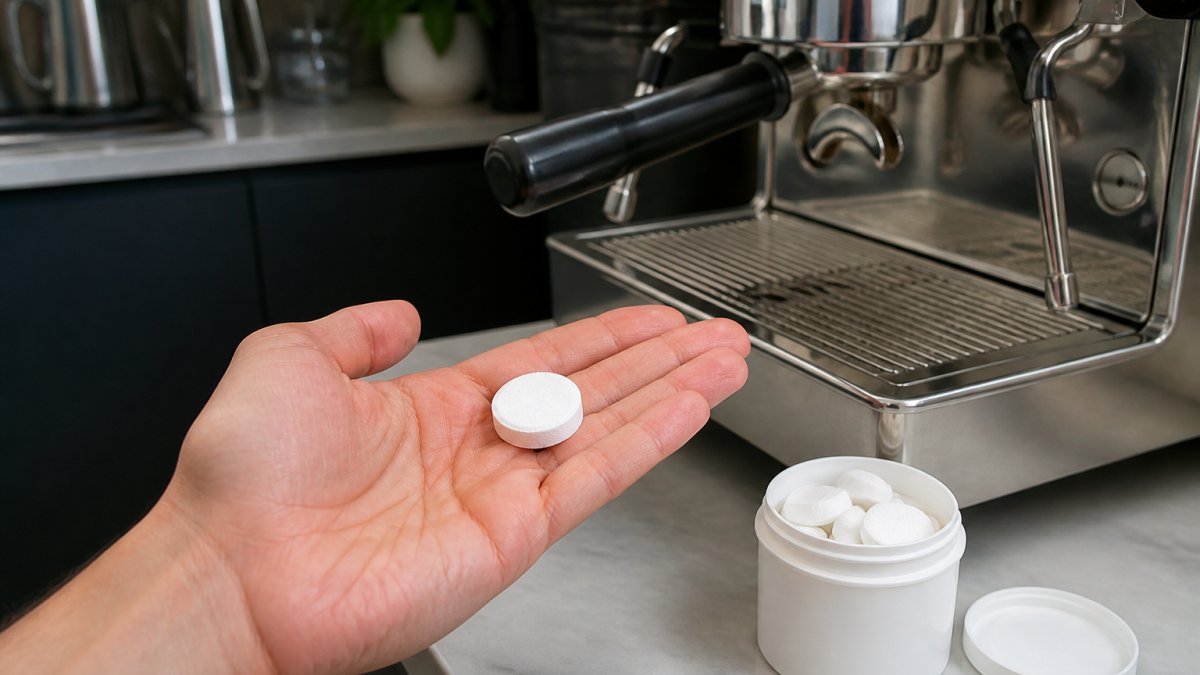
A common mistake is treating the steam wand as an afterthought. A cleaning tablet can help with group-head and internal residue, and our article on whether espresso machine cleaning tablets are worth it walks through when they earn their place in a daily routine. For the full sequence, our espresso machine daily cleaning routine guide breaks it into steps your opening crew can follow without a manual.
Building an Espresso Machine Maintenance Schedule That Staff Will Follow
A maintenance schedule fails when it lives in a manager's head or a binder nobody opens. Put it on the wall behind the espresso machine, split into daily, weekly and monthly columns, and make each task short enough to finish during a slow moment. Staff comply with schedules they understand, so explain why each task matters in a sentence rather than just listing it.
Keep the schedule realistic. A schedule that demands forty minutes of cleaning at 6 a.m. will be quietly abandoned by Thursday. Our guide to maintaining commercial espresso machines covers how to scale the tasks to your shop's volume.
Weekly Deep-Cleaning Tasks: Portafilters, Group Heads and Screens
Weekly deep cleaning goes beyond the daily wipe-down. Soak portafilters, baskets and shower screens in a manufacturer-approved cleaning solution, then scrub away coffee oil that daily rinsing leaves behind. Coffee oil turns rancid, tastes bitter and clogs the small holes in the screen that control water distribution. Crimson Cup's guidance on coffee-shop equipment recommends weekly screen and portafilter soaking alongside deeper cleaning, and we agree that this step is where many shops lose ground without noticing Crimson Cup's coffee shop equipment preventive maintenance guidance.
Check the screens for distortion or blockage at the same time. A screen that is slightly warped spreads water unevenly, which shows up as channeling in the shot long before anyone blames the machine.
Monthly Inspections and Water Filtration Checks
Monthly tasks focus on what daily and weekly routines cannot reach. Inspect group gaskets for cracking or flattening, since a worn gasket lets water leak and reduces brewing pressure. Check the water filter's indicator and replace cartridges on schedule. Water chemistry drives limescale buildup, which can affect a commercial machine's internal components. If your water is hard, a filtration system and a documented descaling interval are not optional extras.
Coffee Grinder Maintenance and Burr Care
The grinder is the machine that most shops forget, and it directly controls extraction. Burrs dull with use, and a dull burr produces inconsistent particle size, which causes both sour and bitter shots from the same bean. Clean the hopper and chute regularly to prevent stale oils from building up, and brush out retained grounds before they get into the next dose.
Track burr replacement by usage rather than by a vague sense that the grind feels off. Keep a spare set of burrs or a reliable replacement source on hand if your grinder is central to service.
Commercial Espresso Machine Troubleshooting and Escalation Thresholds
Knowing when to fix a problem yourself and when to call a technician prevents both wasted time and unsafe repairs. Our guide to spotting an espresso pump that is failing shows the early signs to watch for before a fault reaches the escalation point.
Start with the checks that require no tools. Confirm the machine has power at the outlet and that the breaker has not tripped.
Then work from symptom to likely cause. Weak or uneven pressure at the group usually points to a worn group gasket, a clogged shower screen, or scale in the group.
Set escalation thresholds in writing before you need them. Our article on signs your espresso machine needs repair lists the specific symptoms that mean professional repair is due.
A machine that leaks internally should be taken out of service rather than monitored through the rush.
Keep the escalation path visible.
The article sorts common symptoms into likely causes and sets clear points where staff should stop and call a technician.
Symptom | Likely cause | Action |
Weak or uneven group pressure | Worn gasket, clogged screen, or scale | Check gasket and screen; call tech if persists |
Steam sputters or loses force | Milk-clogged tip or partly closed valve | Clear steam tip; check valve |
Group head drips when idle | Failing gasket or worn valve seat | Stop use; call technician |
Machine won't reach temperature | Element, thermostat, or pressurestat issue | Stop use; call technician |
Grinder labors or grind is inconsistent | Dull burrs or packed grounds | Clear chute; replace burrs if needed |
Internal leak | Failure inside the machine | Take out of service immediately |
Coffee Shop Equipment Preventive Maintenance: Logs, Spare Parts and Downtime Costs
Preventive maintenance only works if you can prove it happened and connect it to money.
Assign ownership rather than assuming it. Name a closing lead responsible for the daily checklist, a manager responsible for weekly and monthly tasks, and one person responsible for ordering parts.
Spare parts are the other half of prevention.
Think through the cost side with your own numbers.
Equipment that is not espresso-related also deserves a schedule and a place in the log.
Finally, write a short downtime response plan before a failure happens. It should answer three questions: who you call, how fast they can come, and what you do while you wait.
Setting Up Your Downtime Response Plan with Highpockets Coffee
A downtime response plan answers three questions before a failure happens: who you call, how fast they can come, and what you do while you wait. Write down your technician's contact details, your backup plan for brewing if the espresso machine is out, and the steps staff should take to protect the rest of the equipment.
Highpockets Coffee offers a Nuova Simonelli lineup in all sizes, refurbished machines, grinders, and expert repair services for businesses across the Pacific Northwest. Before you buy equipment, ask about warranty terms and parts availability. You can request a quote from Highpockets Coffee to plan equipment and service costs for your shop.
Preventing coffee shop equipment downtime comes down to consistent routines, documented schedules and a plan that gets a machine back on line fast. Start with the daily checklist this week, and your next rush will go more smoothly for it.
Frequently Asked Questions
How can a coffee shop prevent equipment downtime?
Most downtime comes from skipped routine care rather than sudden failure. Prevention starts with a written daily cleaning routine for the espresso machine and grinder, a weekly deep clean of portafilters, group heads and screens, and a monthly inspection of gaskets, filters and water quality. Assign each task to a named person and keep a simple log so missed steps are visible. Scheduling a professional service visit at regular intervals catches worn parts before they fail during a rush.
How often should commercial coffee shop equipment be serviced?
Daily cleaning should happen every day the cafe opens, and deeper cleaning should follow a weekly schedule. Most owners also schedule a professional tune-up roughly every six months for espresso machines, with more frequent checks for high-volume locations. Grinders need burr inspection and cleaning on a regular cycle, and the exact interval depends on daily volume and bean oil content. Check the manufacturer's manual for recommended service intervals and adjust based on what your logs show.
What daily maintenance should baristas perform on an espresso machine?
Baristas should backflush the group heads with cleaning detergent at the end of service, purge the steam wands after each use, wipe down the portafilters and group heads, and empty and rinse the drip tray. They should also check that the water reservoir or water line is supplying clean water and that the portafilter baskets are not clogged. Keeping these steps consistent prevents coffee oil buildup, which is a common source of flow problems and off-flavors.
Can vinegar be used to descale a commercial espresso machine?
Vinegar is not recommended for descaling a commercial espresso machine. Its acidity and odor can damage internal seals and gaskets, and it can leave residue that affects taste. Use a descaling solution formulated for espresso machines and follow the manufacturer's dilution and rinse instructions exactly. Descale on the schedule specified in your manual, typically based on water hardness and volume, and install or maintain a water filter to reduce scale formation in the first place.
What are the most common causes of commercial espresso machine failure?
The most common causes include scale buildup from hard water, clogged group heads and screens from coffee oil, worn group gaskets, and neglected water filtration. Pressure and temperature problems often trace back to these issues. Regular cleaning, scheduled gasket replacement and filter changes address the majority of them. A maintenance log helps you spot recurring problems that point to an underlying issue such as water quality or a worn pump.
How can you tell when a commercial espresso machine needs repair?
Early warning signs include inconsistent shot times, shots that channel or pour unevenly, steam pressure that drops or fluctuates, water leaking from the group head or under the machine, unusual noises from the pump, and a machine that takes longer than normal to reach temperature. If a problem persists after basic cleaning and descaling, or if the machine shows any electrical or safety issue, stop using it and contact a qualified technician rather than attempting major repairs during service hours.
What should a coffee shop do when its espresso machine breaks down?
Keep a downtime response plan on file that lists the service contact, the machine's serial number and model, and the location of the water shutoff and power switch. Have a backup brewing method ready, such as a pour-over or drip setup, so the counter can keep serving. Log the failure, the symptoms and any steps already taken before the technician arrives, so diagnosis is faster. Track how long the outage lasts to measure the true cost and to inform future maintenance decisions.
How do you create a preventive maintenance schedule for cafe equipment?
Start by listing every piece of equipment, including espresso machines, grinders, refrigeration and any granita or ice machines. For each one, record the manufacturer's recommended service intervals and the daily, weekly and monthly tasks. Assign an owner for each task and a time to complete it. Review the schedule quarterly against your maintenance log and adjust frequencies where failures or near-misses show a gap. Keep spare gaskets, screens and filters on hand so routine replacements do not require a delayed order.

Comments